🚀 My First Deep Dive into Kubernetes
Lessons, Confusion, and Real Understanding
Kubernetes was one of those technologies I kept hearing about everywhere in DevOps conversations, cloud architecture discussions, and job descriptions, but never truly understood.
I knew Docker. I was getting comfortable with containers. But Kubernetes felt abstract, complex, and honestly… intimidating 😅
So I decided to learn it properly — not by skimming concepts, but by installing it, breaking things, fixing them, and documenting the entire experience.
This post shares what I learned, what confused me, and why the friction itself became one of the biggest learning advantages 🧠
🔄 From Docker to Kubernetes — What Actually Changed?
Docker helped me understand how applications are packaged and run.
Kubernetes taught me how applications stay alive.
- 🐳 Docker runs containers
- ☸️ Kubernetes manages containers over time
With Kubernetes, the focus shifts from running an app to keeping an app healthy:
- Containers can crash and automatically restart
- Networking is abstracted and stable
- Configuration and secrets are centrally managed
- Applications are treated as systems, not single processes
This was my first major mindset shift. Kubernetes isn’t “Docker with extra steps.” It’s a completely different way of thinking about reliability.
🔗 Understanding How Kubernetes Communicates
One of the most important things I learned early on is that Kubernetes is API-driven.
You don’t tell Kubernetes how to do things. You tell it what you want, and it continuously works to make reality match that request.
- Users declare desired state
- Controllers observe current state
- Kubernetes reconciles the difference automatically
🛠️ The Tools That Made Everything Click
kubectl
- Does not run containers
- Sends instructions to the API Server
- Reflects real-time cluster state
Once I understood that kubectl is just a communication tool, Kubernetes started to feel far less mysterious.
kubeadm
- Initializes control plane components
- Sets up certificates and authentication
- Prepares nodes to join a cluster
Learning kubeadm exposed what Kubernetes is actually made of — coordinated components working together, not magic ✨
🎨 Visual Diagrams — How Kubernetes Finally Clicked for Me
🧩 Docker vs Kubernetes — Responsibility Shift
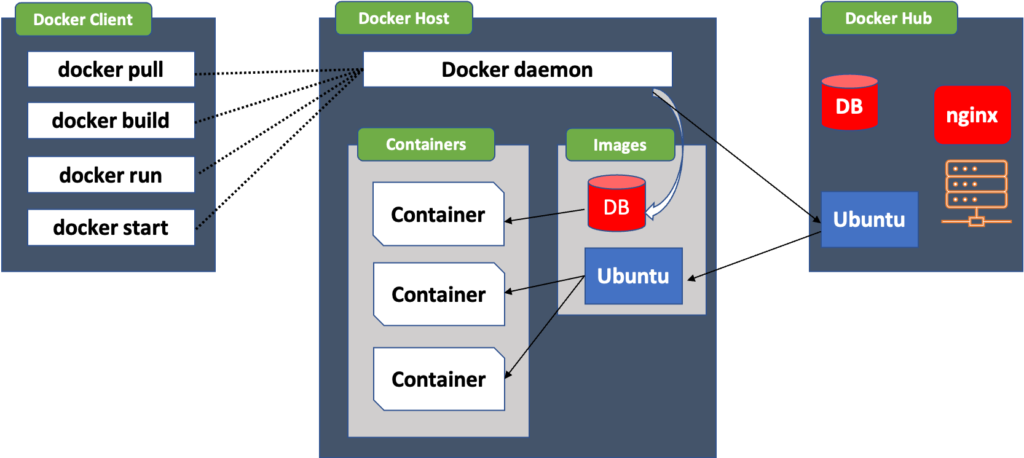
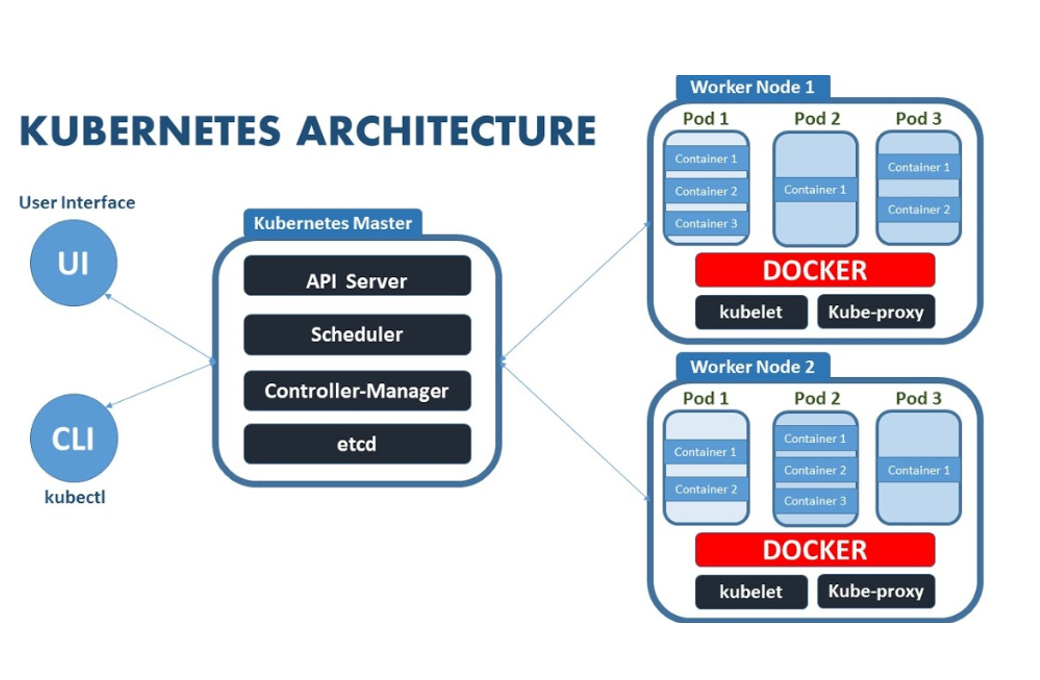
What this diagram shows:
- Docker focuses on running containers
- Kubernetes focuses on managing containers over time
Docker answers “Can my app run?” Kubernetes answers “Can my app survive?”
This helped me understand why Kubernetes feels heavier. It’s solving a much bigger reliability problem.
☸️ Kubernetes Cluster Architecture (Control Plane vs Nodes)
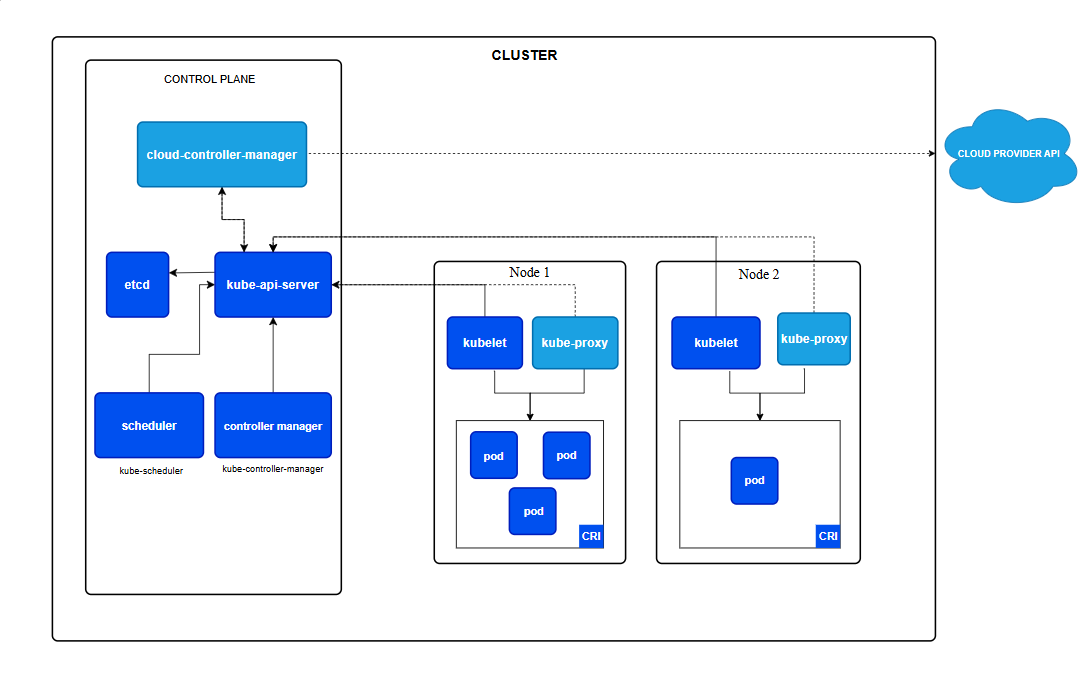
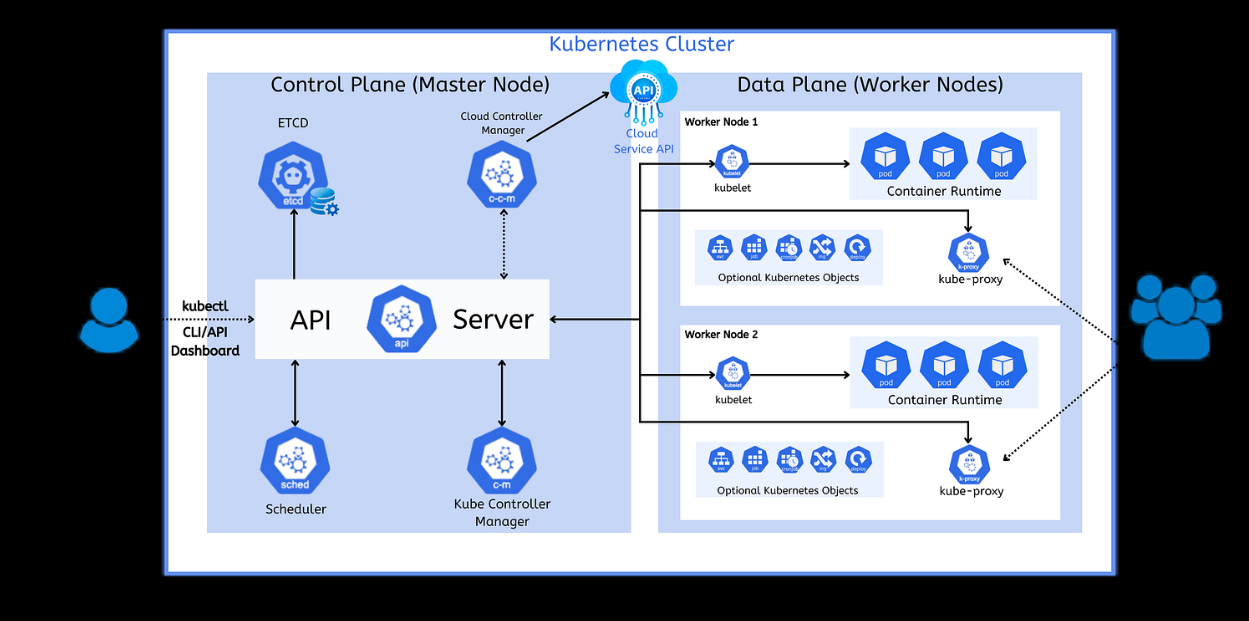
What this diagram shows:
- Control Plane handles decision-making
- Worker Nodes handle execution
Once I realized that kubectl talks only to the API Server and nodes don’t make decisions on their own, Kubernetes stopped feeling random and started feeling intentional.
🔗 How Communication Happens in Kubernetes
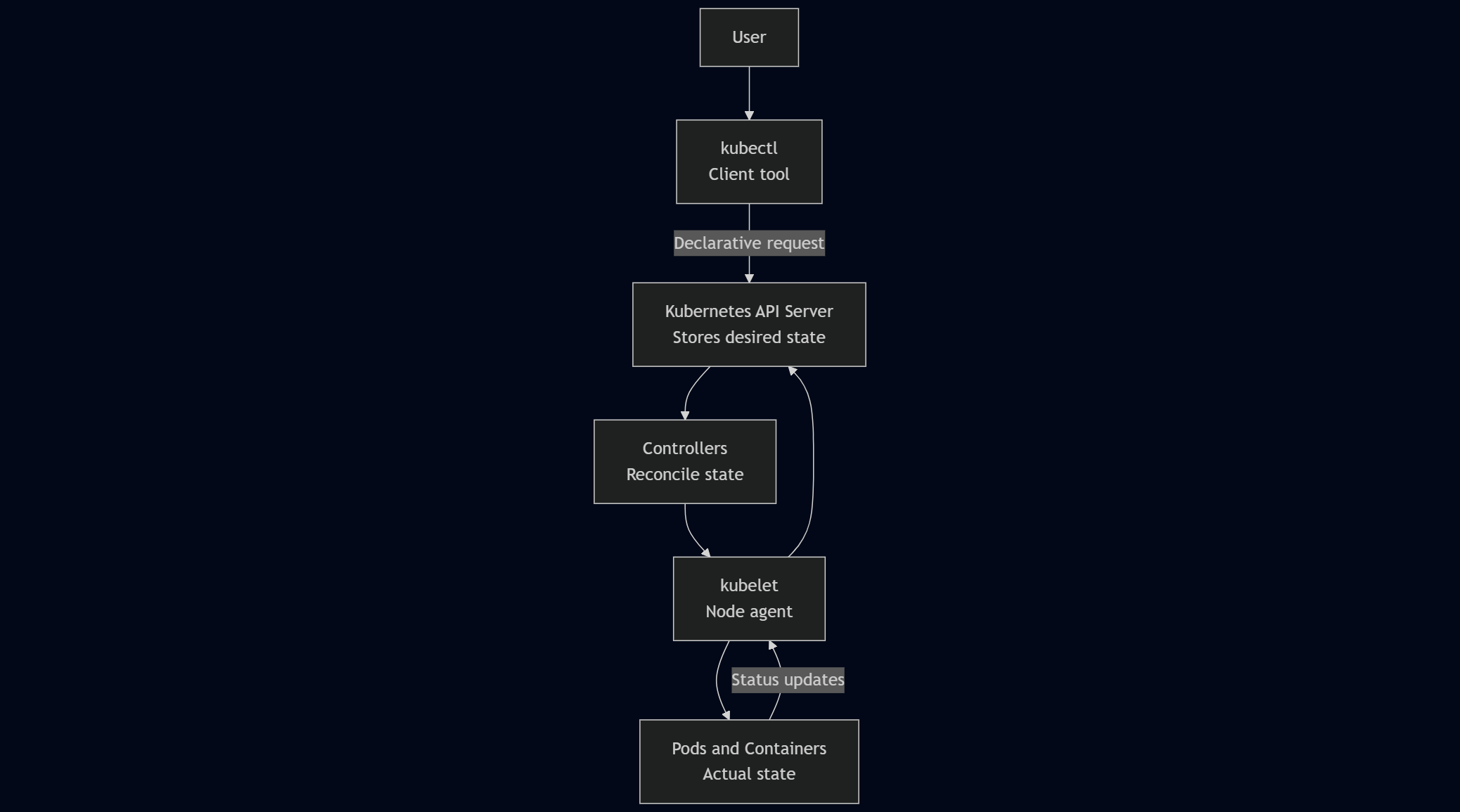
What this diagram shows:
- kubectl → API Server
- API Server → Controllers
- Controllers → Nodes
You don’t execute actions in Kubernetes. You declare intent, and the system reconciles state.
This explains why things sometimes “eventually” work — Kubernetes is always converging.
🌐 Services & Networking (Why Some IPs Never Open)
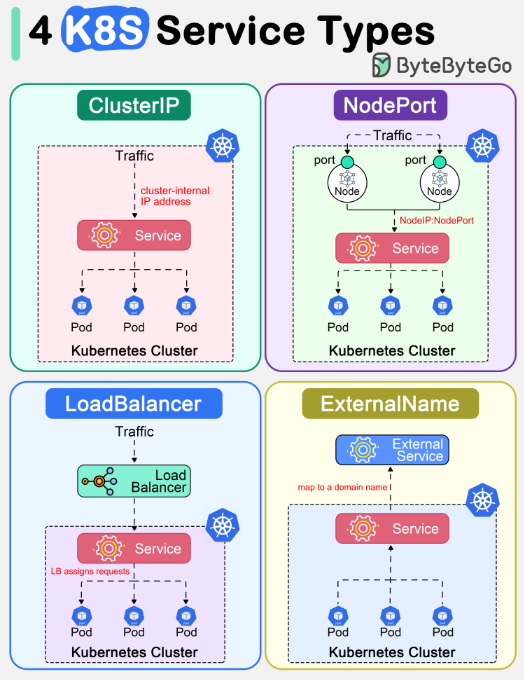
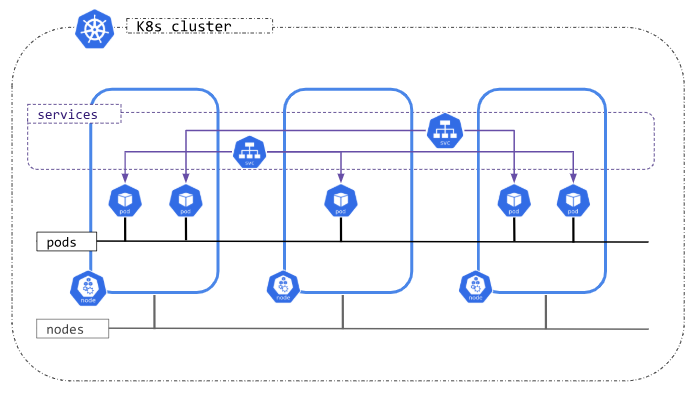
What this diagram shows:
- ClusterIP is internal-only
- NodePort is externally reachable
- Pods are ephemeral and replaceable
This diagram answered my biggest confusion — why some IP addresses look real but will never open in a browser.
Kubernetes wasn’t broken. It was protecting me.
🗄️ MongoDB + Mongo Express on Kubernetes (What I Built)
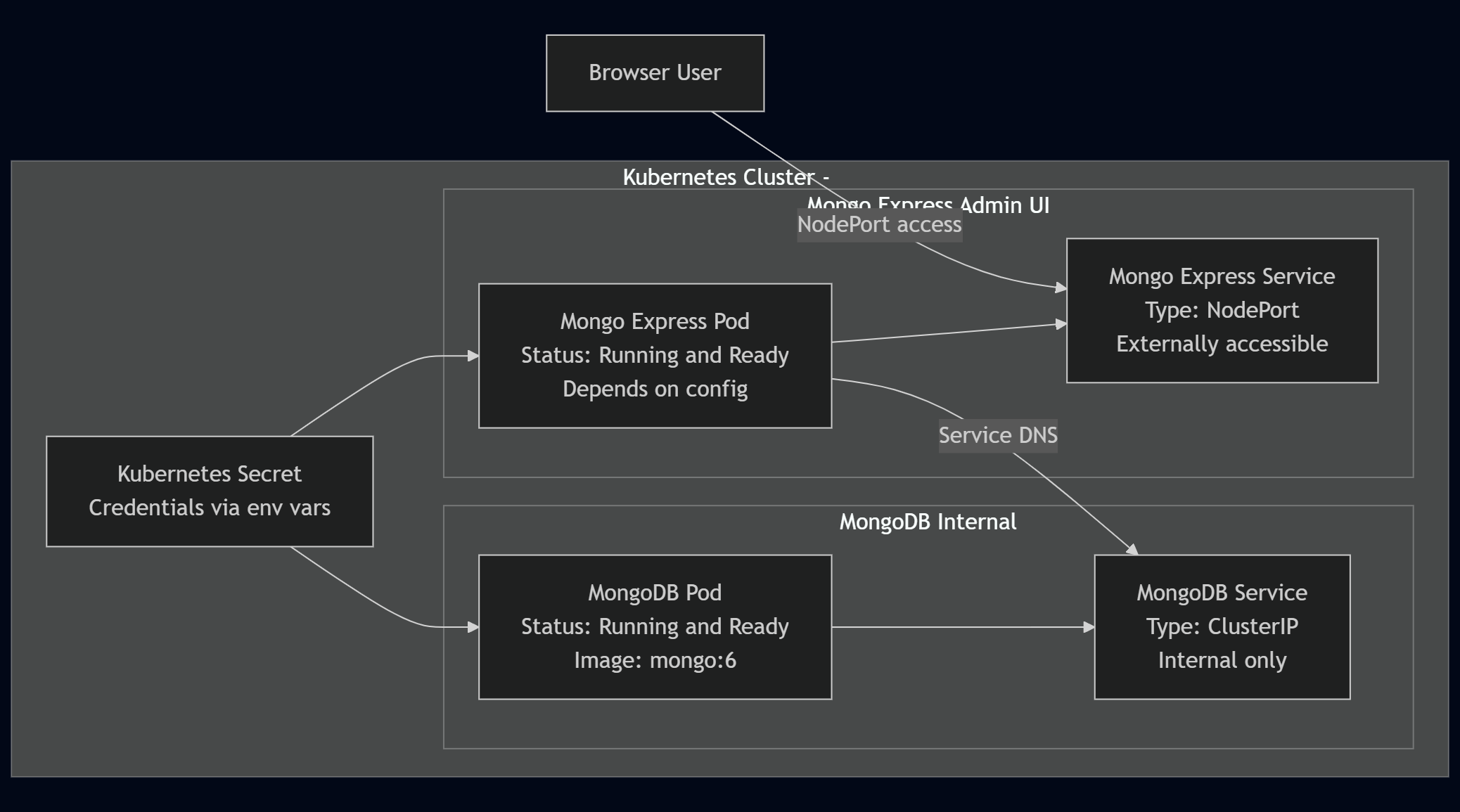
What this diagram represents:
- MongoDB running internally via ClusterIP
- Mongo Express exposed via NodePort
- Secrets shared securely between services
This showed me how Kubernetes enforces separation of concerns:
- Databases stay internal
- Admin tools are explicitly exposed
- Credentials are never hard-coded
🎯 Final Thoughts
Kubernetes isn’t just a tool; it’s a philosophy of system reliability.
Learning it deeply requires patience, curiosity, and the willingness to sit with confusion until clarity emerges.
This is just the beginning of my Kubernetes journey — but it’s already been one of the most rewarding learning experiences I’ve had.